Use Cases.
Where strategic foresight becomes necessary — and how it works in practice.
OUR CLIENTS
We work with organizations exposed to global volatility.

+ Global and multi-market companies.
Organizations whose strategy and performance depend on conditions across several countries.

+ Investment groups and capital allocators.
Private equity firms, asset managers, family offices, and other investors deploying capital across industries and regions.

+ Companies navigating major strategic shifts.
Businesses expanding internationally, restructuring operations, or repositioning their strategy in response to changing market conditions.
WHEN WORKING TOGETHER MAKES SENSE
Organizations typically engage when the cost of not seeing clearly enough — early enough — becomes too high.
Engagements begin when leadership needs forward-looking insight into emerging and potential risks that may affect operations, capital, strategy, and returns — not only to reduce downside, but to position early for advantage before options narrow.
-
Before allocating capital, entering new markets, re-branding, developing new products or services, restructuring operations, or committing to long-term partnerships.
-
Organizations seek to understand where operations, supply chains, financial structures, or investment assumptions may fail during future disruption — before losses occur.
-
Economic, political, or market developments point in different directions, making it unclear what is actually changing and what it means for strategy, exposure, or investment decisions.
-
Organizations want to understand how plans or investment assumptions may hold up under different future conditions before committing significant capital or operational resources.
-
How future conditions may translate into operational, financial, or reputational consequences over time.
WHAT WE DELIVER
Organizations receive forecasts, scenarios, or simulations tailored to the specific questions they need answered.
Each engagement clarifies how conditions are likely to unfold — mapping risks, opportunities, and plausible outcomes — and delivers a concise report focused on what matters most: what is likely to change, and what it means for capital, strategy, and decision-making.
-
Forecasts clarify the most probable trajectory of external shifts — giving leadership an early read on where economic, market, and geopolitical conditions may be heading so strategy, planning, and capital allocation can align with the direction of change.
Use cases include:
— Market & Sector Forecasts
Future demand patterns, cost structures and competitive dynamics shaping revenue potential, margins, and capital allocation.— Policy & Regulatory Forecasts
Tariffs, industrial policy, sanctions, and compliance environments that affect margins, operational exposure, and investment decisions.— Geopolitical Risk Forecasts
Political transitions, regional instability, and great-power tensions that influence supply chains, market access, operational exposure, and strategic investment decisions.— Technology & Disruption Forecasts
Innovation cycles, automation, and technological adoption curves that reshape cost structures, margins, and competitive advantage. -
Scenario modeling maps multiple plausible ways the future could unfold — translating those outcomes into real strategic and financial consequences so organizations can anticipate risk, uncover opportunity, and pressure-test strategy before conditions change.
Use cases include:
— Strategic Outcome Scenarios
Modeling the most likely outcomes of major strategic moves such as market entry, expansion, restructuring, or major capital allocation decisions.— External Shift Scenarios
Modeling how regulatory change, market realignment, policy shifts, or supply-chain disruption may reshape demand, margins, and strategic options.— Geopolitical Flashpoint Scenarios
Modeling the most likely outcomes of conflicts, regional instability, or geopolitical tensions and their operational, supply-chain, and market access implications.— Competitive & Market Scenarios
Modeling how competitors, partners, and markets are likely to reposition as conditions evolve — and what it means for market share, margins, and strategic positioning. -
Simulations test how organizations hold up under disruption and shock — exposing where operations, strategies, supply chains, investment models, or financial structures fail, adapt, or transform before real pressure arrives.
Use cases include:
— Shock Propagation Models
Simulating how geopolitical, operational, or financial disruptions spread through supply chains, partners, and markets — and what they mean for costs, revenue exposure, and operational continuity.— Supply-Chain Stress Tests
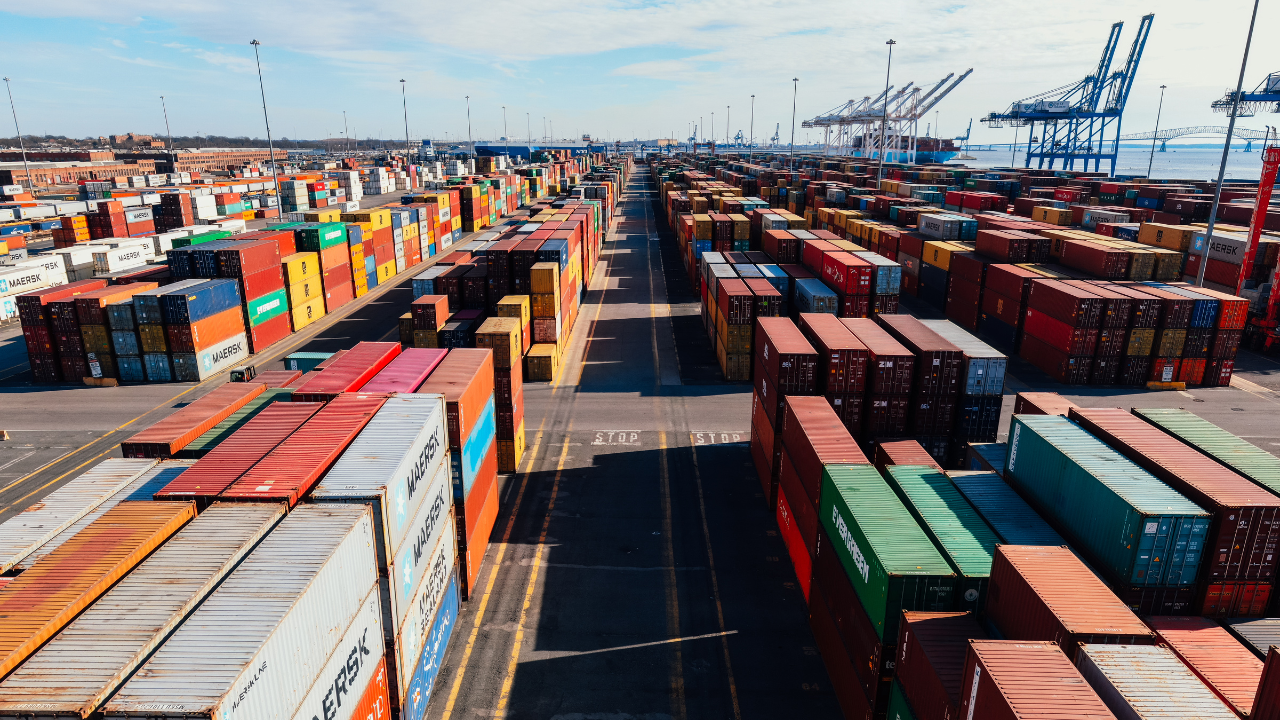
Simulating events such as port closures, sanctions, or logistics bottlenecks and their impact on sourcing, inventory levels, costs, and margins.— Operational Stress Tests
Simulating workforce disruption, capacity constraints, or production volatility and their effect on throughput, costs, and unit economics.— Decision Stress Tests
Testing major strategic moves to understand how they shift exposure, affect capital allocation, or create unintended operational and financial consequences.

Forecasts.
“Show me the most likely direction of external change.”

Scenario Modeling.
“Show me the few plausible futures I need to prepare for.”

Simulations.
“Show me how my organization holds up during disruption — and what that reveals.”
OUR WORK
Example foresight work.
The following public analyses illustrate how foresight helps organizations anticipate risk, protect capital, and capture emerging opportunities.




OUR PROCESS
Each engagement follows a structured four-step foresight process designed to understand how the future may unfold — and what it means for risk and opportunity.
01 Define the strategic question.
We begin by defining the strategic question the organization needs answered — what leadership seeks to understand. This ensures the analysis is focused on the issues that matter most and tailored to the organization’s specific context.
02 Gather the right signals.
We assemble the signals shaping the organization’s environment — real-time data, market signals, policy dynamics, geopolitical forces and industry conditions — so the analysis reflects the conditions most likely to affect exposure, performance, and strategic positioning.
03 Apply analytical testing.
We test how these forces could interact under different conditions — conducting red-team exercises and applying bias-mitigation protocols to pressure-test assumptions and surface vulnerabilities, leverage points, and plausible future pathways.
04 Distill the implications.
We translate the analysis into clear strategic and financial implications — what is most likely to change, what it means for capital and financial performance, and where strategy, positioning, or decision-making may need to adjust.
OUR MODEL
Every forecast, scenario, and simulation is developed using our proprietary foresight model — a multi-layered analytical framework that guides and disciplines the analysis.
At its core, the model is a structured way of thinking. Grounded in experience and applied with disciplined judgment, it combines real-time data, historical patterns, and structural analysis — testing them against one another, with assumptions challenged and conclusions pressure tested through bias-mitigation protocols and structured red-team exercises. The result is strategic foresight grounded in conclusions that have been rigorously tested from multiple angles — reflecting how situations are likely to unfold, what that means for risk and opportunity, and how to protect and grow capital.
-
Integration of thousands of market, policy, geopolitical, and operational indicators to detect early structural shifts.
-
Testing present dynamics against historical precedent to separate structural signal from temporary noise.
-
Identifying where pressure may build, where small shifts could trigger larger consequences, and where unexpected risks or opportunities may emerge.
-
Assessing how key players are structurally likely to behave under constraint — not how they publicly position themselves.
-
Assigning explicit likelihood ranges and confidence levels to prevent false certainty.
-
Integrating structured safeguards to counter bias and reduce the risk of flawed analysis.
-
Challenging core assumptions, modeling alternative pathways, and pressure-testing conclusions under adverse conditions.
-
Identifying overlooked risks and vulnerabilities outside the primary analysis that could still create material operational or financial consequences.

“The real world is too complex for any single person to fully grasp in its entirety. Serious foresight work therefore begins with humility — constantly testing where our own assumptions may be wrong.”
-Aaron Chamberland
Founder
OUTCOMES WE DELIVER
Organizations see risks and opportunities early — while time and options remain to protect and grow capital.
+ Early awareness of meaningful risk.
Risk becomes visible before it begins affecting revenue, margins, operations, or asset values.
+ Hidden vulnerabilities brought into view.
Operational, financial, or strategic weaknesses are identified before they create material consequences.
+ Strategic options stress-tested before commitment.
Major decisions, strategies, and assumptions are examined against multiple plausible future conditions before capital or operational commitments are made.
+ Greater confidence in major decisions.
Leadership moves forward with a clearer understanding of potential downside, upside, and strategic trade-offs.
+ Hidden opportunities brought into view.
Emerging advantages in markets, timing, or positioning are identified before they are widely recognized or priced in.
Explore working together.
Begin a brief preliminary conversation to determine strategic fit and alignment.